
A bruise is an area of skin discoloration. A bruise occurs
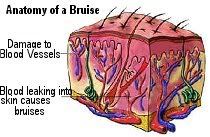 when small blood vessels break and leak their contents into the soft tissue beneath the skin.
There are 3 types of bruises.
1. Subcutaneous - beneath the skin.
2. Intramuscular - within the belly of the underlying muscle.
3. Periosteal - bruising of the bone.
Bruises can last from days to months, with the bone bruise being the most severe and painful.
Bruises are often caused by falls, sports injuries, car accidents, or blows received by other people or objects. If you take a blood thinner, like aspirin or warfarin (Coumadin), you are likely to bruise more easily.
The main symptoms are pain, swelling, and skin discoloration. The bruise begins as a pinkish red color that can be very tender to touch. It is often difficult to use the muscle that has been bruised.
For example, a deep thigh bruise is painful when you walk or run. Eventually, the bruise changes to a bluish color, then greenish-yellow, and finally returns to the normal skin color as it heals.
Bruises Home Remedies
Treat bruises using potatoes - Potatoes contain an enzyme called catecholase which is found in most cosmetic products. It is used to lighten the skin. Peel a potato and
 run it through your processor. Put the processed on a piece of cheesecloth and place it over the bruise. This is also good for them dark circles under the eye.
Ice - Use an ice pack to treat any injury that might lead to a bruise. The ice pack will need to be applied as quickly as possible following the injury and treatment continued for 24 hours if you suspect that the bump will blossom into a severe bruise. Apply the ice pack at 15-minute intervals. Cooling constricts the blood
 vessels, and that means less blood spills into the tissues to cause the bruise. A cold pack also minimizes the swelling and numbs the area, so it won't hurt as much as a bruise left unchilled.
Heat - After applying the ice pack for 24 hours, use a heat pack to dilate the
 blood vessels and improve circulation in the area of the bruise.
Sit with your feet up - Bruises are little reservoirs of blood. Blood, like any liquid will run down if you are standing. Blood that has collected in a bruise will seep down through soft tissues and find other places to puddle.
Vitamin C - Add vitamin C to your daily diet. People who lack vitamin C in their diets tend to bruise more easily. And their wounds heal more slowly.
 Vitamin C helps build protective collagen tissue around blood vessels in the skin. If you tend to bruise easily, it is suggested you take 500mg of vitamin C each day.
Watch the medications - People who take aspirin to protect against heart disease will find that a bump turns into a bruise very easily. Some people taking blood thinners will find they bruise easily, too. Other drugs such
 as anti-inflammatory drugs, antidepressants, or asthma medicines can inhibit clotting under the skin and cause larger bruises. Alcoholics or drug abusers tend to bruise easily, too.


